How to Prepare the Retatrutide Solution

Educational guidance for laboratory and research use only.

Included Materials

Upon ordering, the following items are provided:

Preparation of the Retatrutide Solution

1

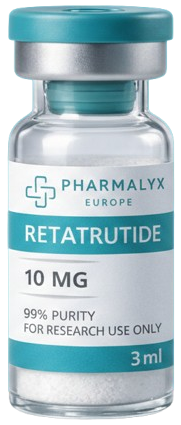
Remove the protective caps from both the sterile water vial and the Retatrutide vial.

2

Disinfect the rubber stoppers of both vials using an alcohol swab.

3

Using an insulin syringe, withdraw 1 mL of sterile water and slowly inject it into the Retatrutide vial.

4

Repeat this step once more, for a total of 2 mL of sterile water.

5

Allow the vial to stand undisturbed for approximately 5 minutes to ensure complete dissolution.

6

After reconstitution, the vial will contain 10 mg of Retatrutide in 2 mL of solution.

7

Using a new sterile insulin syringe, withdraw the required volume of solution as needed for research purposes.

!

The solution is prepared for research use only.

Standard Subcutaneous Injection Technique

The following describes a standard subcutaneous injection technique as performed by trained medical professionals in clinical or research settings:

1

The lower abdominal area, below the navel where subcutaneous fat tissue is typically present, is disinfected using an alcohol swab.

2

A fold of subcutaneous fat tissue is gently lifted, and the needle is carefully inserted.

3

The solution is injected slowly into the subcutaneous tissue.

4

After injection, the syringe is withdrawn and disposed of in accordance with applicable safety and sharps disposal guidelines.

Dosing Information Referenced from Published Studies

We cannot provide dosing recommendations. Any dosing decisions must be determined and supervised by a qualified healthcare professional.

However, published clinical research may be reviewed to understand dosing ranges that have been evaluated in controlled study settings. Available data indicate that weekly doses ranging from 2 mg to 4 mg have been studied, demonstrating a balance between observed effects and tolerability.

For reference only, based on a solution concentration of 10 mg in 2 mL:

This information is provided solely for educational and research-related context and does not constitute medical advice.


Safety Profile (Research Context)

Reported side effects in clinical settings have generally been mild and most commonly observed during the initial phase of treatment. Ongoing trials continue to evaluate tolerability and safety parameters.

Research Materials

Important Notice

This website and its content are intended for research and educational purposes only. Information provided does not constitute medical advice, diagnosis, or treatment recommendations.