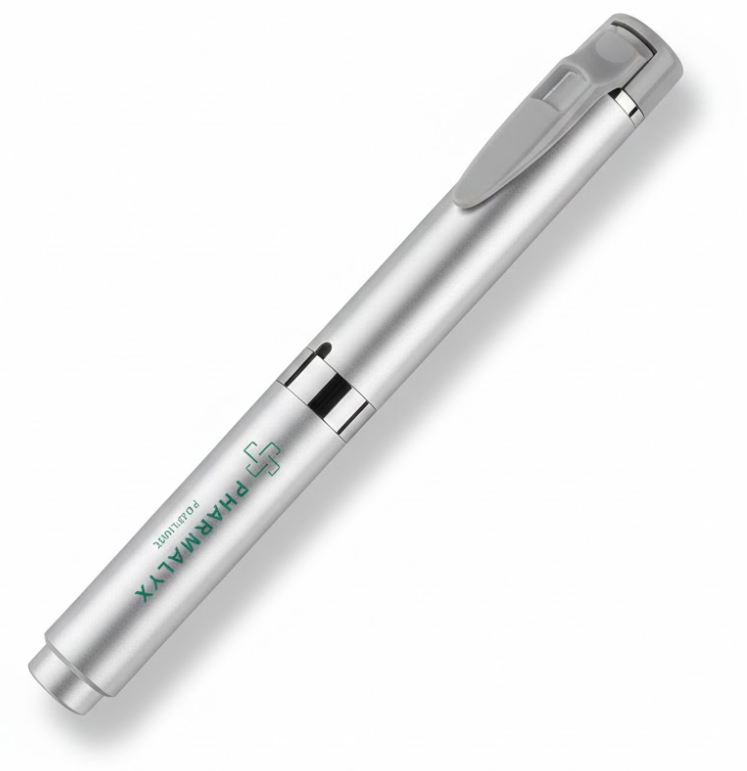
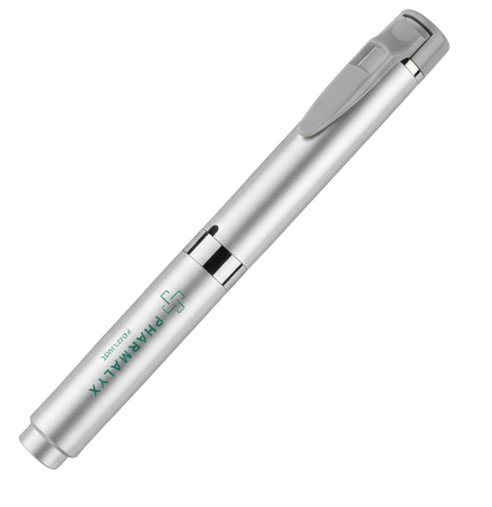
How the Semaglutide Pen Measures Dose

The reusable Semaglutide injection pen measures dosage in International Units (IU) rather than milligrams (mg).
10 IU corresponds to 0.1 mL of solution delivered by the pen.
The pen cartridge contains 4 mg of Semaglutide in 1.6 mL of solution.
The medication concentration is fixed by the cartridge.
The injected dose depends on the number of IU selected on the pen.

Example (for reference only): A weekly dose of 1 mg corresponds to 40 IU on the pen.

This information is provided to explain how the pen functions and does not constitute dosing advice.

Step-by-Step Use (Educational Description)

01

Wash your hands thoroughly before handling the pen.

02

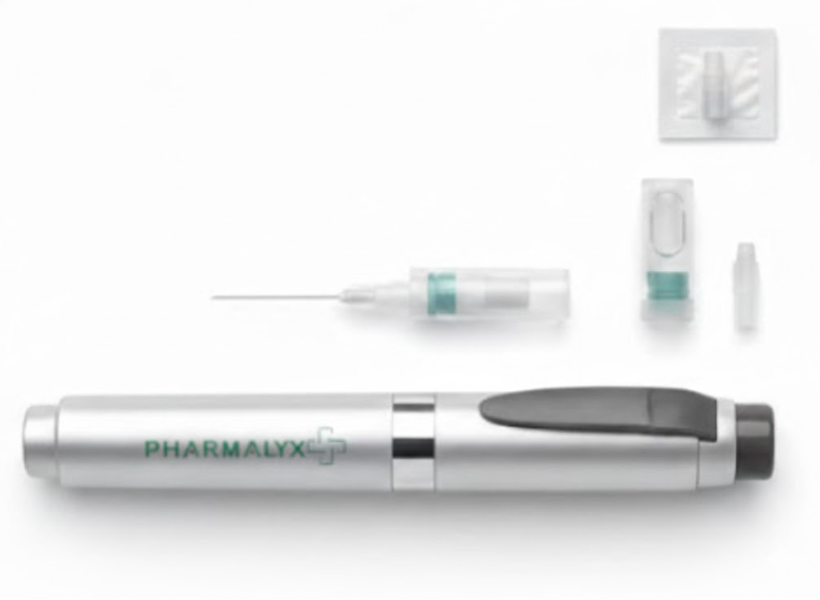
Attach a new sterile needle to the pen before each use.

03

Check the solution in the cartridge. It should appear clear and colorless.

04

Select a small number of IU and press the injection button until a drop of liquid appears.

— This step helps remove any excess air from the needle.

05

Use the dose selector to choose the required number of IU.

06

Inject under the skin in one of the following areas:

— Abdomen
— Thigh
— Upper arm

07

Rotate injection sites with each injection.

08

After injection, keep the needle in place for approximately 15 seconds to allow full delivery of the solution.

09

Remove the needle and dispose of it safely according to sharps disposal guidelines.

10

Replace the pen cap after use.

11

Store the pen in the refrigerator after use.

Can the Pen Be Reused?

Yes, the pen itself is reusable. However, once the cartridge is empty:

Replacement cartridges and needles can be requested from your supplier or by contacting us using the options below.

Safety Profile (Research Context)

Semaglutide has been extensively studied in clinical research settings and is generally well tolerated. Reported side effects are most commonly gastrointestinal in nature and tend to occur during the initiation and dose-escalation phases. These effects are typically mild to moderate and often diminish as the body adapts. Long-term studies continue to monitor safety parameters, including metabolic, gastrointestinal, and cardiovascular markers, to further establish its tolerability profile.


Available Components

Important Notice

This website and all information provided are intended for research and educational purposes only. No content on this page constitutes medical advice, diagnosis, or treatment recommendations.